Featured post

ART CLASS Year 2016/17

Hi again!! We've just started a new year in our highschool. I hope you ' re ready to create interesting art projects. I'm sure ...

Friday, 13 May 2016

Hi!!!!

We're here again!!!!  We're going to do a lot of things together!!!!!


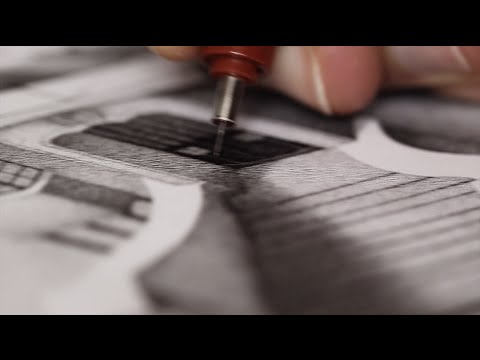
This work has been made by one of my students. Do you like it???

It´s made only by drawing little dots. 

Little things can show a huge talent!!!!!

Friday, 18 December 2009

Merry Christmas...and Happy New Year...


Colour your heart
with Chirstmas lights
draw a smile
and get rid of your sadness.
. .


The Scream by Edvard Munch

Mary said to me that she loved this picture and she had it in her bedroom.
So I'm sending you some information about the author and the painting...
Why is he screaming?
Things that make us want to sream.(please, send your opinion)
Short biography:
He was born on December 12, 1863 in Loton, Norway. He was the son of an Army Medical Corps doctor, Christian Munch. His mother had the name of Laura Catherine. Edvard was the second of five children.
In 1864, their family moved to the city of Oslo. This is where he originated his art training.
In the early 1800's, Edvard Munch became influenced by two older comrades, Christian Krohg and Frits Thaulow. They were into the Norwegian art scene, and had painting based on French naturalism.
In May of 1885, a scholarship from Frits Thaulow, had Edvard Munch travel to Paris. Edvard Munch stayed there for three weeks, and then he spent the summer at Borre and returned to Oslo to begin three of his major works. That is the time when his work began to be widely known.
Sources of inspiration
Munch wrote, concerning the image:
"I was walking along a path with two friends - the sun was setting - suddenly the sky turned blood red - I paused, feeling exhausted, and leaned on the fence - there was blood and tongues of fire above the blue-black fjord and the city - my friends walked on, and I stood there trembling with anxiety - and I sensed an infinite scream passing through nature."
A new:
In 2003, astronomers claimed to have identified the time that the painting depicted. The eruption of Krakatoa in 1883 caused unusually intense sunsets throughout Europe in the winter of 1883-4, which Munch captured in his picture.
A mummy:
In 1978, the renowned Munch scholar Robert Rosenblum suggested that the strange, sexless creature in the foreground of the painting was probably inspired by a Peruvian mummy which Munch could have seen at the 1889 Exposition Universelle in Paris. This mummy, which was crouching in fetal position with its hands alongside its face, also struck the imagination of Munch's friend Paul Gauguin: it stood model for the central figure in his painting Human misery (Grape harvest at Arles) and for the old woman at the left in his painting Where Do We Come From? What Are We? Where Are We Going?. More recently, an Italian anthropologist speculated that Munch might have seen a mummy in Florence's Museum of Natural History which bears an even more striking resemblance to the painting.
A curiosity:
On August 22, 2004 this version, executed in tempera on cardboard, was stolen from the Munch Museum, Oslo, at gunpoint.
Thieves taking paintings from the Munch Museum, August 2004On 12 February 1994 the National Gallery's Scream was stolen. Initially the theft was linked to various anti-abortion groups active in Norway, but this turned out to be false. After three months, the painting was offered back to the Norwegian government for a ransom of USD $1 million. The ransom was refused, but the painting was nevertheless recovered on 7 May, following a sting operation organised by the Norwegian police with assistance from the British Police and the Getty Museum.

Tuesday, 29 September 2009

Getting to Know Famous Paintings

Here we have some famous paintings. Look at them carefully and choose one. Afterwards, I¨ll send you the name of the painters and the title.


Saturday, 15 August 2009

Information about painters and their work 6


If you have chosen this picture, it's by Vincent Van Gogh and it's titled "Starry night".

Vincent van Gogh (March 30, 1853 - July 29, 1890) is generally considered the greatest Dutch painter after Rembrandt, though he had little success during his lifetime. Van Gogh produced all of his work (some 900 paintings and 1100 drawings) during a period of only 10 years before he succumbed to mental illness. His fame grew rapidly after his death especially following a showing of 71 of van Gogh's paintings in Paris on March 17, 1901 (11 years after his death).


Van Gogh's influence on expressionism, fauvism and early abstraction was enormous, and can be seen in many other aspects of 20th-century art. The Van Gogh Museum in Amsterdam is dedicated to Van Gogh's work and that of his contemporaries.

Several paintings by Van Gogh rank among the most expensive paintings in the world. On March 30, 1987 Van Gogh's painting Irises was sold for a record $53.9 million at Southeby's, New York. On May 15, 1990 his Portrait of Doctor Gachet was sold for $82.5 million at Christie's, thus establishing a new price record (see also List of most expensive paintings).

Information about painters and their work 5


If you have chosen this picture, it's by Pablo Picasso and it's titled "The Dream".

No other artist is more associated with the termModern Art than Pablo Picasso. He created thousands of paintings, prints, sculptures and ceramics during a time span of about 75 years. For many Picasso is the greatest art genius of the twentieth century. For others he is a gifted charlatan. Undisputed is the fact that he influenced and dominated the art of the twentieth century like no other modern artist.
Pablo Picasso was born on October 25, 1881 in Malaga, Spain, as the son of an art and drawing teacher. He was a brilliant student. He passed the entrance examination for the Barcelona School of Fine Arts at the age of 14 in just one day and was allowed to skip the first two classes. According to one of many legends about the artist's life, his father, recognizing the extraordinary talent of his son, gave him his brushes and palette and vowed to paint never again in his life.

During his lifetime, the artist went through different periods of characteristic painting styles. The Blue Period of Picasso lasted from about 1900 to 1904. It is characterized by the use of different shades of blue underlining the melancholic style of his subjects - people from the grim side of life with thin, half-starved bodies. His painting style during these years is masterly and convinces even those who reject his later modern style.

During Picasso's Rose Period from about 1905 to 1906, his style moved away from the Blue Period to a friendly pink tone with subjects taken from the world of the circus.

Cubism

After several travels to Paris, the artist moved permanently to the "capital of arts" in 1904. There he met all the other famous artists like Henri Matisse, Joan Miro and George Braques. He became a great admirer of Henri Matisse and developed a life-long friendship with the master of French Fauvism.

Inspired by the works of Paul Cezanne, he developed together with George Braque and Juan Gris developed the Cubist style. In Cubism, subjects are reduced to basic geometrical shapes. In a later version of Cubism, called synthetic cubism, several views of an object or a person are shown simultaneously from a different perspective in one picture.


In 1937 the artist created his landmark painting Guernica, a protest against the barbaric air raid against a Basque village during the Spanish Civil War. Picasso's Guernica is a huge mural on canvas in black, white and grey which was created for the Spanish Pavilion of the Paris World's Fair in 1937. InGuernica, Picasso used symbolic forms - that are repeatedly found in his works following Guernica - like a dying horse or a weeping woman.

Guernica was exhibited at the museum of Modern Art in New York until 1981. It was transferred to the Prado Museum in Madrid/Spain in 1981 and was later moved to the Queen Sofia Center of Art, Madrid in 1992.


"Guernica" by Pablo Picasso (1937)